What Has Zohran Mamdani Done So Far In His 1st 100 Days In Office?
UPDATE — Friday, April 10, 2:30 p.m. EST:
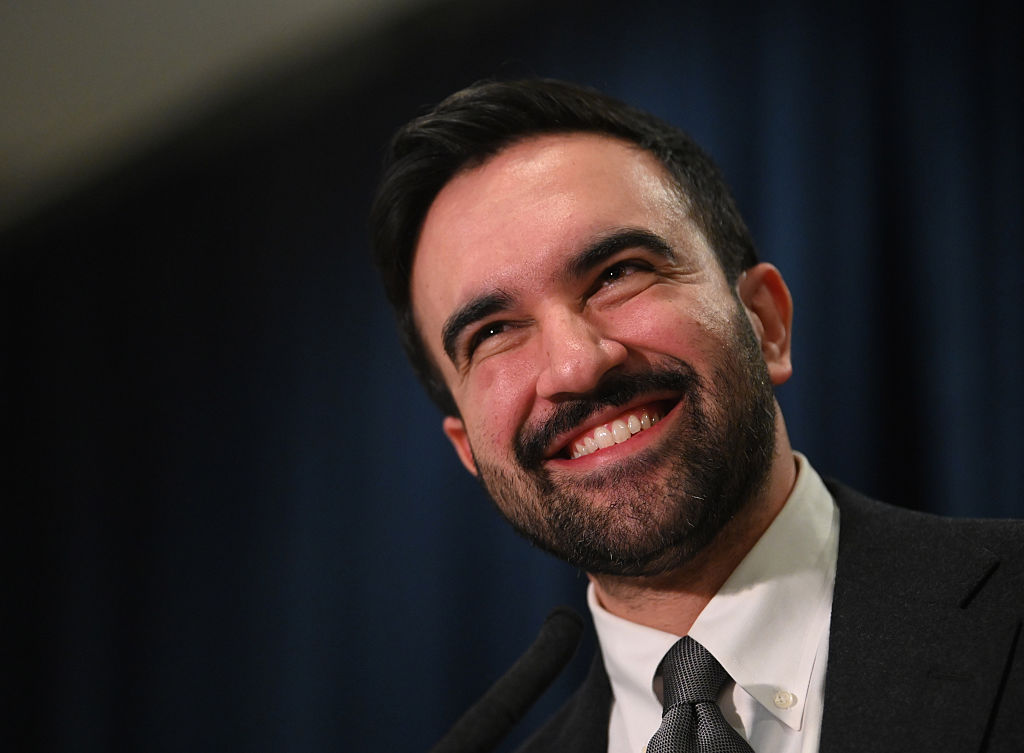
When Zohran Mamdani was sworn in as the 111th Mayor of New York City on Jan. 1, 2026, he entered office with a clear mandate: tackle affordability, restore trust in government, and reimagine how the city serves working people. A self-described Democratic Socialist, Mamdani has spent his first weeks moving quickly on housing, transportation, fiscal policy, and structural reform, while signaling a sharp break from the previous administration. Now, he is celebrating a major milestone with his first 100 days in office, pointing to what he describes as meaningful progress “rooted in justice, equity and care,” the Democrat said in a press release.
“In our first 100 days, we took concrete steps to increase public health and safety, protect vulnerable and historically disenfranchised communities, and reaffirm New York as a place of refuge and possibility.”
Here’s a closer look at the NYC Mayor’s accomplishments so far.
Secured funding for childcare initiative.
Mamdani’s hard work was reflected in the successful funding he and his administration secured to expand free childcare in partnership with the state, a plan he first unveiled alongside Gov. Kathy Hochul in January. The initiative aims to bring free childcare to 2-year-olds across New York City through the 2-Care program, while strengthening the existing 3K system with the long-term goal of achieving universal childcare access for families throughout the city.
Under the plan, the state will continue expanding access to high-quality childcare programs through 2026 using a variety of models, a move expected to save New York families billions each year. Since taking office, Hochul has already committed $8 billion toward childcare infrastructure, significantly boosting affordability and access while laying the groundwork for a universal system statewide. To help promote the 2-Care initiative, Mamdani enlisted Cardi B in March to judge a jingle contest that will ultimately determine the program’s theme song.
Strong winter storm response.
The city also faced two winter storms, and with Mamdani’s strong social media presence, he helped mobilize thousands of snow shovelers to assist with cleanup efforts. Workers reportedly earned anywhere between $19.14 and $30 per hour during the height of the storm.
According to ABC New York, the Mayor said that during February’s severe snowstorm alone, 1,400 New Yorkers signed up for the snow removal program in just one day. He stressed that this added workforce was critical in supporting city crews. Together, they cleared more than 16,000 crosswalks, over 4,000 fire hydrants, and upwards of 7,000 bus stops. A press release also noted that the administration implemented the city’s first-ever 24-hour Code Blue, opened new warming centers, deployed warming buses, and transitioned approximately 2,000 unsheltered individuals into shelter between Jan. 19 and March 4.


Expanding essential services.
The Mamdani administration has also prioritized expanding access to healthcare and essential services, with efforts focused on ensuring all New Yorkers can live with dignity. These actions include closing the dilapidated 30th Street Shelter while maintaining overall capacity, opening the city’s first pet-inclusive family shelter at Magnolia Gardens, launching a new HELP Women’s Intake Shelter in East New York, investing $20 million in perinatal and early childhood mental health through the Strong Foundations Initiative, rolling out a $1 million vaccination awareness campaign, and expanding overdose prevention services alongside new youth health clinics in Brooklyn and Queens. He and his team also retrieved $8.5 million in stolen wages back into the pockets of working New Yorkers.
Establishing the Office of LGBTQIA+ Affairs & Strengthening Public Safety.
In addition, Mayor Mamdani established the Office of LGBTQIA+ Affairs to lead policies and programs supporting LGBTQIA+ residents. He appointed civil rights attorney Taylor Brown, the first openly transgender person to head a New York City agency, marking a historic step toward more inclusive leadership.
On public safety, Mamdani has pushed a comprehensive approach centered on prevention, transparency, and fairness. His administration reports historically low crime levels in the first three months, including record lows in murders and shootings, while also creating the city’s first Deputy Mayor for Community Safety and launching the Office of Community Safety. Additional measures include requiring the release of body-worn camera footage within 30 days of critical incidents and ending criminal enforcement for low-level traffic violations involving e-bike riders and cyclists.
Protecting immigrant communities.
Facing increased federal pressure, the administration has also taken steps to protect immigrant communities and reinforce New York’s sanctuary city status. These efforts include launching a “Know Your Rights” campaign in 10 languages, distributing 30,000 flyers through houses of worship, and signing Executive Order 13 to prohibit ICE from entering city properties without a judicial warrant, strengthening data privacy protections, and establishing agency audits along with a crisis-response task force.
Opening the first Outposted Therapeutic Housing Unit at NYC Health.
The Mamdani administration has also committed to closing Rikers Island while advancing reforms aimed at improving conditions within the corrections system. These steps include enforcing the city’s ban on solitary confinement, appointing Stanley Richards as commissioner of the Department of Correction, making him the first formerly incarcerated person to lead the agency, and opening the first Outposted Therapeutic Housing Unit at NYC Health + Hospitals/Bellevue to expand specialized care for the most vulnerable individuals in custody, the first-ever medical unit to be opened at the facility, according to the NYC-DSA Instagram page.
Housing and Tenant Rights: An Immediate Priority
From day one, Mamdani made clear that housing affordability would anchor his administration. One of his first executive actions was to restore the city’s Office to Protect Tenants, aimed at defending renters from illegal evictions, unsafe living conditions, and predatory practices. He appointed housing activist Cea Weaver to lead the agency, highlighting his administration’s alignment with tenant advocacy groups.
“Today, on the first day of this new administration, on the day where so many rent payments are due, we will not wait to deliver action. We will stand up on behalf of the tenants of this city,” Mayor Mamdani said after he was appointed to office in January, according to a press release. “You cannot hold landlords who violate the law to account unless you have a proven principled and tireless fighter at the helm. That is why I am proud today to announce my friend Cea Weaver as the Director of the newly reinvigorated Mayor’s office to protect tenants.”
“Rental Ripoff” Hearings
Mamdani ordered citywide hearings within his first 100 days, dubbed “Rental Ripoff” hearings, in which tenants could publicly report hidden fees, neglectful landlords, and building mismanagement. The initiative is designed to elevate tenant voices while building a record for future enforcement and legislation.
SPEED and LIFT Task Forces
To address supply constraints, the mayor created two housing task forces: SPEED (Streamlining Production for Efficient and Equitable Development) to reduce bureaucratic barriers slowing construction of affordable housing and LIFT (Land Identification for Future Transformation) to identify underused, city-owned land suitable for housing development.
Together, these efforts aim to accelerate housing production while maintaining tenant protections.
Intervention in Pinnacle Realty Bankruptcy
In a notable legal move, Mamdani directed the city to intervene in bankruptcy proceedings involving Pinnacle Realty, a “notorious landlord” with thousands of housing violations, to help ensure tenants receive funds owed to them. The mayor announced the big move during a press conference on Jan. 1, stating that tenants renting with Pinnacle Realty suffered from “a lack of heat,” “roaches,” and “the kind of conditions that no New Yorker should live through.” He noted that there were more than 5,000 open hazardous violations with the landlord.
The action signaled his willingness to use municipal leverage against negligent property owners and led to major wins for those impacted, including 30 million in repairs for tenants, according to the Mayor’s instagram.
Transportation and Infrastructure: Local Action While Bigger Plans Take Shape
Although Mamdani’s signature campaign promise, free city buses, requires coordination with the state-controlled Metropolitan Transportation Authority, he has taken several immediate steps within the city authority. He greenlit multiple transportation projects that had been paused under former Mayor Eric Adams, including the long-debated redesign of McGuinness Boulevard in Greenpoint. The redesign will include protected bike lanes and pedestrian safety improvements, according to New York Mag.
Addressing a longstanding quality-of-life issue, the administration allocated $4 million for modular public restrooms across the city, an investment framed as both a public health and dignity initiative.
In a symbolic but hands-on gesture, Mamdani personally joined efforts to pave over a hazardous bump on the Williamsburg Bridge bike lane. He has also committed to expanding “daylighting” at intersections, removing parking spaces near corners to improve visibility and reduce crashes.
Budget and Fiscal Policy: Progressive Revenue and Targeted Investments
Mamdani’s preliminary budget reflects a focus on youth services and education while pursuing new revenue streams. The Mayor wants to set aside $106 million for the Summer Rising youth program and $70 million dedicated to preschool special education services, Chalkbeat notes.
In Albany, Mamdani has advocated for a 2% personal income tax increase on New Yorkers earning over $1 million annually, along with higher corporate taxes. The goal: close the city’s budget gap without cutting core services.
To address efficiency concerns, he created Chief Savings Officer positions within every city agency. Their mandate is to identify waste, improve cost-effectiveness, and modernize operations, part of a broader push to show fiscal responsibility alongside progressive spending.
Revoking Orders from the Prior Administration
Mamdani has also moved quickly to reshape city governance. He signed an executive order rescinding all mayoral directives issued by Eric Adams on or after Sept. 26, 2024, the date of Adams’ federal indictment. The move was framed as a symbolic and administrative reset.
“Today marks the first step in building an administration that works for all New Yorkers,” the Mayor said in a statement at the time. “We’ve established the foundations of it, and now it’s time to deliver on our affordability agenda, tackle the challenges facing New Yorkers, and usher in a new era for New York City, one that proves that government can deliver for working people.”
To consolidate community outreach efforts, Mamdani established a new Office of Mass Engagement, led by former campaign field director Tascha Van Auken. The office aims to centralize public participation initiatives and strengthen ties with neighborhood groups.
New Judicial Appointments
The mayor appointed Ali Najmi to chair the Mayor’s Advisory Committee on the Judiciary and made several new appointments to the Criminal and Family Courts, signaling an early imprint on the city’s legal system.
Mayor Zohran Mamdani also appointed three experienced attorneys to the city’s judicial bench: judges Cary Fischer, Natalie Barros and Andres Casas. According to a press release, Judge Cary Fischer began his career with the Bronx County District Attorney’s Office, serving as an Assistant District Attorney in the Criminal Court, Grand Jury, and Narcotics Bureaus before continuing his prosecutorial work in Kings County. There, he rose through the ranks, from the Crimes Against Children Trial Bureau to Senior Trial Attorney and Deputy Bureau Chief of the Red Zone Trial Bureau.
Prior to his appointment, Judge Fischer led the Early Case Assessment Bureau and served as an adjunct professor in the Criminal Prosecution Clinic at New York Law School.
Judge Natalie Barros began her legal career with the Richmond County District Attorney’s Office, where she spent a decade handling cases in the Criminal Court and Trial Bureaus before joining the New York State Unified Court System. She went on to serve as a Court Attorney in Criminal Court in Richmond County and, most recently, as a Supervising Court Attorney.
Judge Andres Casas started his career as a pro bono attorney with The Safe Passage Project before serving four years as an Assistant District Attorney in Richmond County. He later joined the New York State Unified Court System as a Principal Court Attorney in Supreme Court, Criminal Term, in Kings County, briefly worked as a litigation attorney for the Port Authority of New York and New Jersey, and ultimately returned to the court system as a Principal Court Attorney in Supreme Court, Richmond County.
In addition to these new appointments, the mayor also announced nine judicial reappointments.
Whether his boldest ideas, particularly fare-free buses and new tax structures, can break through tough politics and fiscal constraints remains to be seen. But one thing is clear: his administration has moved swiftly to translate campaign promises into executive action, hopefully paving the way for a new era for millions of New Yorkers.
SEE MORE:
Zohran Mamdani Policies: How NYC’s Mayor Plans To Lead The City
NYC Mayor Zohran Mamdani Announces Universal Child Care Plan
What Has Zohran Mamdani Done So Far In His 1st 100 Days In Office? was originally published on newsone.com